


Benoa, August 28, 2026 – Bali is one of Indonesia’s major centers for capture fisheries and tuna export activity. Benoa is known as the primary landing port for the tuna longline fleet operating in the Indian Ocean and serves as one of the country’s key tuna export hubs. Benoa is even referred to as Indonesia’s second-largest fishery export distribution hub after Muara Baru in Jakarta, with around 2,000 workers involved across various points of the value chain, from vessel operations to processing and distribution of catch. Benoa’s significant contribution to tuna exports and industrial fishing activity makes the port a strategic location for ensuring decent labor practices and the protection of fishery workers.
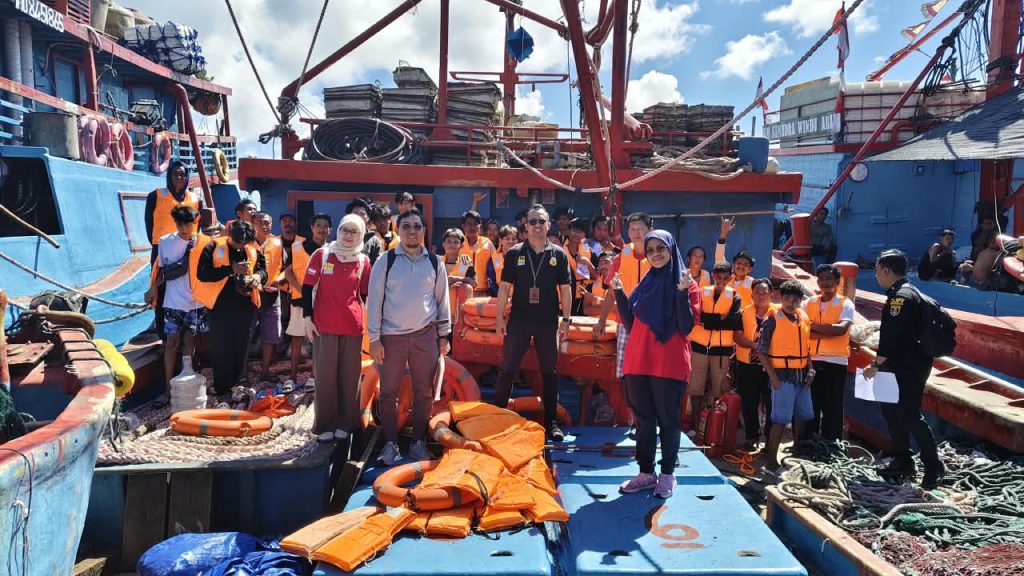
In an effort to ensure decent working conditions aboard fishing vessels, the Regional Forum for the Protection of Fishery and Fisherman Workers of Bali Province (Forda Bali) carried out a joint inspection activity aboard fishing vessels operating at Benoa Port from August 26–28, 2026. This activity is a joint effort between Forda Bali, the Ministry of Marine Affairs and Fisheries, the Ministry of Manpower, and Destructive Fishing Watch (DFW) Indonesia.
Over the three days of the activity, the inspection team—comprising the Ministry of Marine Affairs and Fisheries, the Ministry of Manpower, the Fisheries Port Authority (Syahbandar Perikanan), the Bali Provincial Manpower and Transmigration Office, the Bali Provincial Marine Affairs and Fisheries Office, the Denpasar Health and Quarantine Center (Balai Besar Kesehatan dan Karantina), the Benoa Marine and Fisheries Resources Supervisory Unit, and BPJS Employment (BPJS Ketenagakerjaan)—examined the working and living conditions of crew members on 4 vessels preparing to depart from Benoa Port.
The direct on-board inspections focused on the fulfillment of workers’ rights, occupational health and safety (OHS), the adequacy of accommodation, and compliance with fisheries regulations. In addition, the inspection also mapped out the full scope of the employment process for crew members—from recruitment, to accommodation facilities and safety equipment aboard the vessel, through to the wage payment system.
This joint inspection activity is one of the implementations of Forda Bali’s Regional Action Plan, and in particular serves as a key action item of Forda’s Working Group 2, which deals with joint labor inspection.
The Head of the Crewing Working Team at the Directorate of Vessels and Fishing Gear, Ministry of Marine Affairs and Fisheries, Mr. Mijil, stated that this trial joint inspection represents a step by the Ministry of Marine Affairs and Fisheries in carrying out the mandate of Presidential Regulation No. 25 of 2026 on the Ratification of ILO Convention C188. Some provisions of the convention had previously been incorporated into Ministry of Marine Affairs and Fisheries Regulation No. 4 of 2026.
“This joint inspection is not only a requirement under Ministry of Marine Affairs and Fisheries Regulation No. 4 of 2026, but is also a concrete step by the Ministry, in collaboration with the Ministry of Manpower and Forda Bali, in carrying out the regulatory mandate related to the protection of fishery workers, as well as an initial step in implementing ILO Convention C188,” said Mijil.
This is not the first time such a joint inspection has been carried out. Previously, the Ministry of Marine Affairs and Fisheries and the Ministry of Manpower conducted joint inspection in several regions, including North Sulawesi, Central Java, East Java, and Jakarta. However, those activities took place before Indonesia ratified ILO Convention C188.
“Even though this joint inspection is not the first to be carried out, the Memorandum of Understanding between the Ministry of Marine Affairs and Fisheries and the Ministry of Manpower on joint inspection, together with the ratification of ILO Convention C188, has opened up opportunities for our fellow labor inspectors to be more intensive in conducting inspection in this sector,” said Prima, a representative from Binwasnaker & K3 (the Directorate General for Manpower Supervision and Occupational Health and Safety).
For this trial inspection, in addition to using guidelines and checklists adapted from the labor inspector guidance jointly developed by the Ministry of Marine Affairs and Fisheries, the Ministry of Manpower, and various other parties, the supervisory team also developed and trialed a digital tool intended to make it easier for inspectors to carry out examinations and determine risk ratings for each vessel inspected. It is hoped that this digital tool will become the standard tool used by inspection teams both at the national and regional levels.
This digital joint-inspection system tool will later be handed over by DFW Indonesia to the Ministry of Marine Affairs and Fisheries and the Ministry of Manpower for continued development, to be used as a centralized, real-time vessel risk monitoring system. “We hope that with this digital system in place, inspection teams will no longer conduct vessel inspections at random, but rather based on the risk ratings that appear on the system’s dashboard,” said Imam Trihatmadja, Program Director of DFW Indonesia.
During the activity, Abdullah, a fishing vessel crew member met during the inspection, expressed appreciation for the effort. “This inspection is a good thing. Even though I was quite nervous during the check, having this kind of inspection helps us understand what’s still lacking and needs to be improved,” said Abdullah.
The findings and recommendations from this inspection, in addition to being compiled into a joint report by the inspection team, will also be conveyed to the business operators whose vessels were inspected, to serve as input for the labor compliance improvements that fishery business operators in Benoa need to make.
Read also : Mitigasi Pelanggaran Awak Kapal Perikanan, Forda Bali Gelar Inspeksi Bersama
read also : Perlindungan Awak Kapal Perikanan di Bali Terus Menuju Perbaikan


