


Writer: Delvina Nabila, DFW Indonesia Researcher
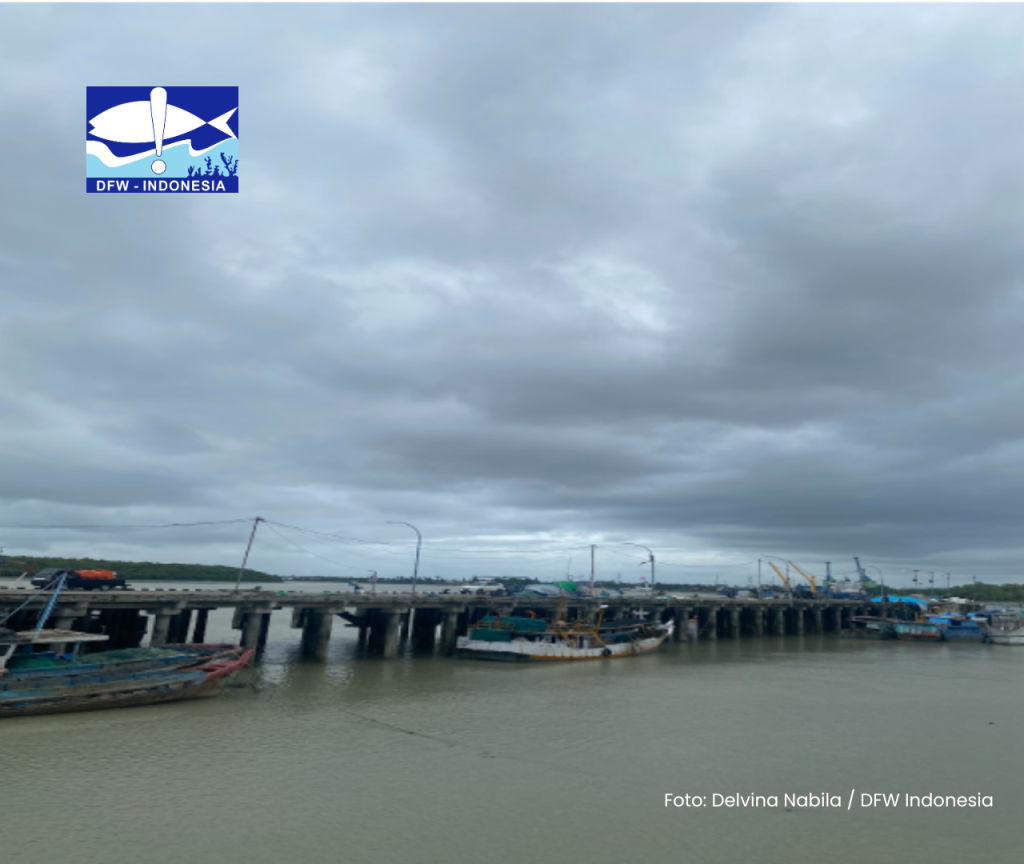
Along the waters of Merauke, fishers no longer fear only the tides and crashing waves. They also fear the growing rumors that trawl vessels are returning—vessels capable of sweeping the seabed clean, taking both mature fish and juvenile marine life in their path. Those fears intensified earlier this year when two Shrimp Trawl Net (Jaring Hela Udang Berkantong/JHUB) vessels docked at Merauke Port. For many local fishers, their arrival revived painful memories of the environmental damage that trawl fishing once inflicted on the sea that sustains their livelihoods.
Fear Shaped by Experience
Legally speaking, the JHUB vessels are permitted to operate under the Minister of Marine Affairs and Fisheries Regulation No. 36 of 2023, which authorizes the use of JHUB fishing gear provided that it complies with technical requirements and operates only within designated Fishing Lane 3 within Fisheries Management Area (WPP) 718. Nevertheless, the arrival of these modified trawl vessels in Merauke has generated considerable controversy. One manifestation of this opposition was the fishers’ demonstration held in April 2026. During one of our interviews, Leunard Rumbekwan, Head of the Merauke Fisheries Office, acknowledged that the protests reflected widespread concerns among local fishing communities.
Those concerns were echoed by Rani (pseudonym), the wife of a fisherman from Kumbe Village.
“With trawls, everything gets swept away—including coral reefs and juvenile fish. On top of that, I heard that another 200 trawlers are coming,” she said.
Her husband, Edi (pseudonym), explained that although reports of hundreds of incoming trawlers remain unconfirmed, the anxiety is rooted in lived experience. Before the national trawl moratorium took effect in 2015, only a limited number of trawl vessels were legally licensed. In practice, however, many unlicensed vessels followed, operating alongside them and extensively exploiting the marine resources of Merauke.
Fishers worry not only about declining fish stocks but also about losing their own fishing gear. Trawl nets can destroy traditional fishing nets worth as much as IDR 4,000,000 each—a substantial investment for small-scale fishers. Fuel shortages further compound these concerns. Fishers already spend hours queuing to purchase diesel fuel at subsidized prices. When supplies run out, they have little choice but to buy fuel from private retailers at significantly higher prices. Many fear that once JHUB vessels—which can consume dozens of tons of diesel during a single fishing trip—begin operating regularly, fuel supplies will become even more limited.
Change Without Answers
Fishers in Lampu Satu and Binaloka Villages said their catches have steadily declined over the past two to three years. The situation has become so difficult that some vessels have ventured beyond Indonesia’s permitted fishing grounds, even crossing international maritime boundaries. For many, returning home empty-handed after spending heavily on fuel and provisions means not only losing income but also accumulating debt from each unsuccessful fishing trip.
Not every fisherman opposes the arrival of JHUB vessels. Some argue that JHUB vessels operate in different fishing grounds from vessels under 30 gross tons (GT), reducing the likelihood of direct competition. Yet even those who hold this view acknowledge that fish catches have declined over recent years, and no one can say with certainty why. Although the government has restricted JHUB operations to Fishing Lane 3 within WPP 718, fishers judge the situation by what they observe at sea. Marine resources have become increasingly scarce, a reality reflected in their daily catches. Instead of receiving explanations for these changes, they have seen permits issued for modified trawl vessels. For many fishers, this has only deepened feelings of uncertainty and distrust.
The arrival of JHUB vessels was also not preceded by meaningful public consultation. According to the Head of Merauke Port Office, no dedicated public outreach had been conducted regarding JHUB operations. Information about the vessels’ arrival was shared only when fishers came to the port office to complete their routine departure procedures.
To better understand fishers’ concerns, the Coastal Fisheries Initiative (CFI) Indonesia, facilitated by DFW Indonesia, convened a Focus Group Discussion (FGD) on 14 July at the Merauke Port Office. The discussion created a space for dialogue on the ecological and socio-economic implications of introducing modified JHUB fishing gear in WPP 718. Participants included local fishers, community representatives, local government officials, port authorities, and other relevant stakeholders.
During the discussion, Rudy, a member of the Indonesian Fishers Association (Himpunan Nelayan Seluruh Indonesia or HNSI), expressed disappointment that the implementation of the JHUB regulation had proceeded without first consulting the fishing communities most directly affected.
“As local fishers, we often feel marginalized by this policy,” he said.
Throughout the discussion, fishers repeatedly described the return of JHUB vessels as reopening old wounds associated with trawl fishing. Joshua, another local fisher, summarized the prevailing sentiment.
“The trauma is still there. We need guarantees that local fishers will be protected,” he concluded.
Transparency in Regulatory Change
Fishers recognize that declining catches may also be influenced by seasonal fluctuations or the use of inappropriate mesh sizes. At the same time, they believe that if trawl fishing once again becomes widespread in Merauke’s waters, marine ecosystems will have little opportunity to recover. This is especially true for fish and shrimp species that depend on seasonal breeding cycles. During the FGD, several participants proposed introducing seasonal fishing closures to allow marine resources sufficient time to grow and reproduce.
The fishing communities of Merauke are not opposed to investment in the development of the region’s fisheries sector. Rather, their resistance reflects a desire to protect themselves from repeating the negative experiences associated with previous trawl operations. The implementation of new regulations without adequate public outreach or meaningful consultation—at a time when marine resources are already under pressure—has heightened concerns about how JHUB operations may affect both the marine environment and the livelihoods that depend upon it. Ultimately, fishers hope that those who come to utilize Merauke’s waters will also be willing to listen to the voices of the communities whose lives have long depended on them.


